

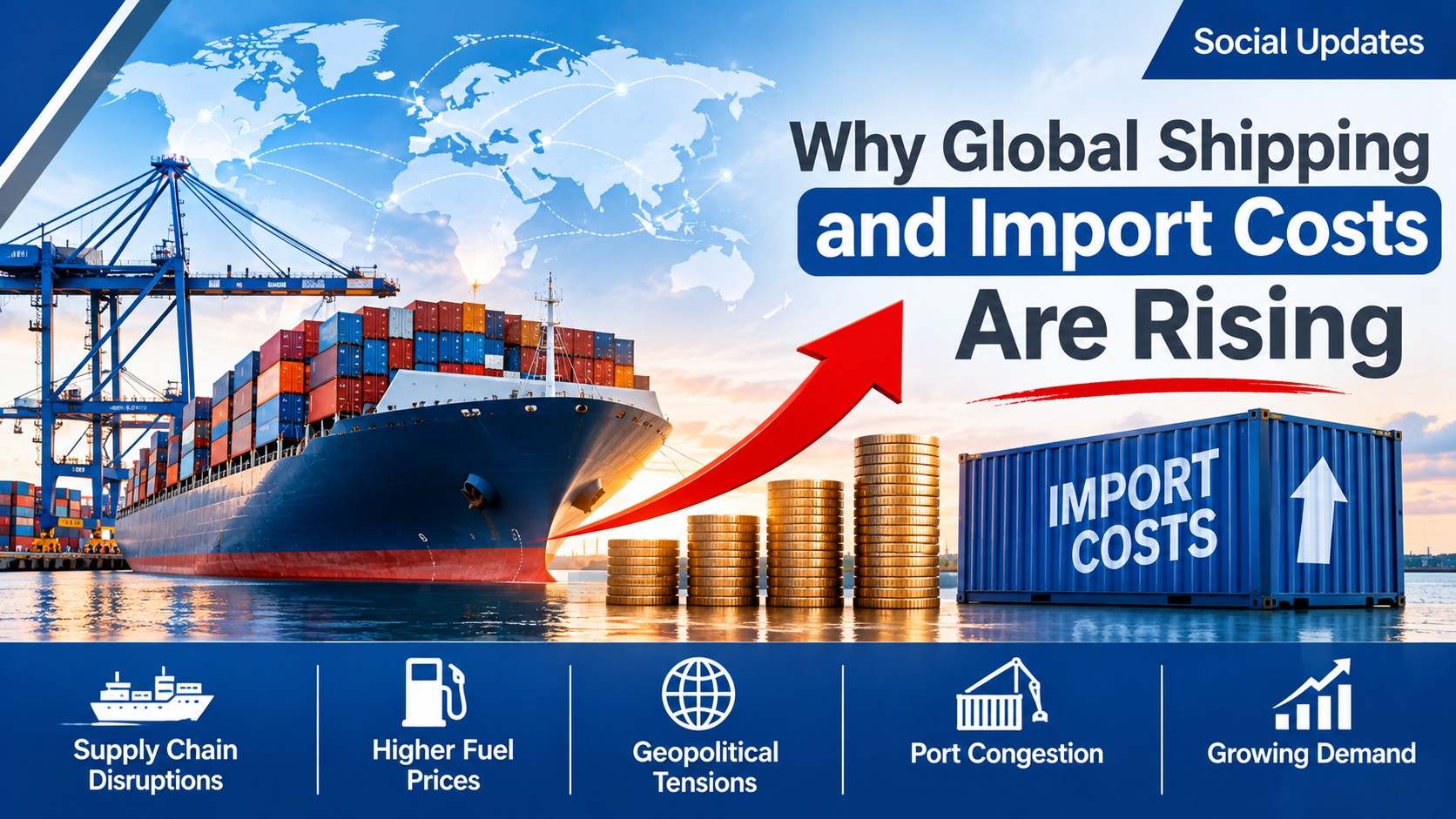
If everyday goods feel like they cost more to ship or buy from overseas lately, that’s not just a perception; several overlapping global trade changes are pushing costs higher in 2026. Here’s what’s actually driving it, explained without the jargon.
Several Changes Are Happening at Once
Rising import costs in 2026 aren’t the result of one single policy or event. They’re the combined effect of shifting tariff regimes in multiple countries, the end of long-standing duty-free thresholds for small shipments, and ongoing supply chain adjustments that started years ago and haven’t fully settled.
The End of Low-Value Import Exemptions
For years, many countries allowed small international shipments, often under a set dollar or euro value, to enter duty-free. This made direct-to-consumer overseas shopping cheap and simple. That’s changing.
The European Union removed its duty-free exemption for shipments valued under €150 in mid-2026, replacing it with a small flat customs duty applied to nearly all incoming packages from outside the EU, regardless of value.
The United States made a similar shift, ending a comparable exemption for low-value shipments entering through international mail as of mid-2026. Together, these changes mean a growing share of small, individual overseas purchases now carry a customs charge that didn’t exist just a year or two earlier, a cost that often gets passed directly to the consumer.
Expanding and Shifting Tariff Rates
Beyond the low-value shipment changes, several countries have adjusted broader tariff rates throughout 2025 and 2026. The U.S. has both raised and, in some cases, lowered tariffs on different product categories and trading partners at different points, creating a genuinely complex and shifting landscape for any business that imports or exports internationally.
New tariffs specifically targeting pharmaceutical products took effect in mid-2026. Meanwhile, updated trade agreements with specific partners have reduced certain other tariffs.
This pattern, some rates rising and others falling depending on country and product category, is part of why it’s hard to name a single, universal reason shipping got more expensive. The honest answer depends heavily on what you’re importing and from where.
You May Also Like: What a Fed Interest Rate Hike Actually Means for Your Wallet
Persistent Supply Chain Adjustments
Global shipping costs also continue to reflect adjustments from disruptions that began several years ago. Shipping capacity, port efficiency, and fuel costs all factor into the base cost of moving goods internationally, independent of tariff policy.
When several of these pressures compound at once- higher tariffs, new customs processing requirements, and elevated base shipping costs- the result for a specific product can be a meaningfully higher landed cost than a year prior.
Who Feels This Most
Small online retailers that source products internationally are often hit hardest, since they typically lack the negotiating leverage and financial cushion that larger importers have to absorb sudden cost increases.
Consumers buying directly from overseas retailers now frequently see customs charges applied at checkout or upon delivery that didn’t previously apply to smaller purchases, changing the actual price of what looked like a bargain on an international site.
Businesses with complex, multi-country supply chains face the added burden of tracking a genuinely different set of rules for each country they import from or export to, since rates and exemptions vary significantly by jurisdiction.
What This Means Practically
If you regularly shop from international retailers, expect to see customs fees applied more consistently than in the past, even on relatively inexpensive items.
If you run a business that imports goods, it’s worth reviewing your supply chain’s specific exposure by country and product category rather than assuming a single, uniform cost increase; the actual impact varies significantly based on where your goods come from and what they are.
Frequently Asked Questions
Why did my small international order suddenly get a customs charge?
Several major markets, including the EU and the U.S., removed duty-free exemptions for low-value shipments in 2026. This means packages that previously entered without a customs charge now often carry one, regardless of their value.
Is shipping getting more expensive everywhere, or just in certain countries?
It varies by country and by what’s being shipped. Some tariff rates have risen. New trade agreements have lowered others. So the overall picture depends heavily on the specific origin and destination of a shipment.
Will these costs come back down?
It’s uncertain. Trade policy continues to shift, and some tariffs face ongoing legal challenges that could affect future rates. There’s no guarantee current costs represent a permanent baseline rather than a temporary point in an evolving situation.
Does this affect large businesses as much as small ones?
Generally, no; larger businesses typically have more resources and supply chain flexibility to absorb or work around rising import costs compared to smaller businesses and individual consumers.
You May Also Like: LLC vs. Sole Proprietorship: How to Choose When Starting a Business


Contributer