
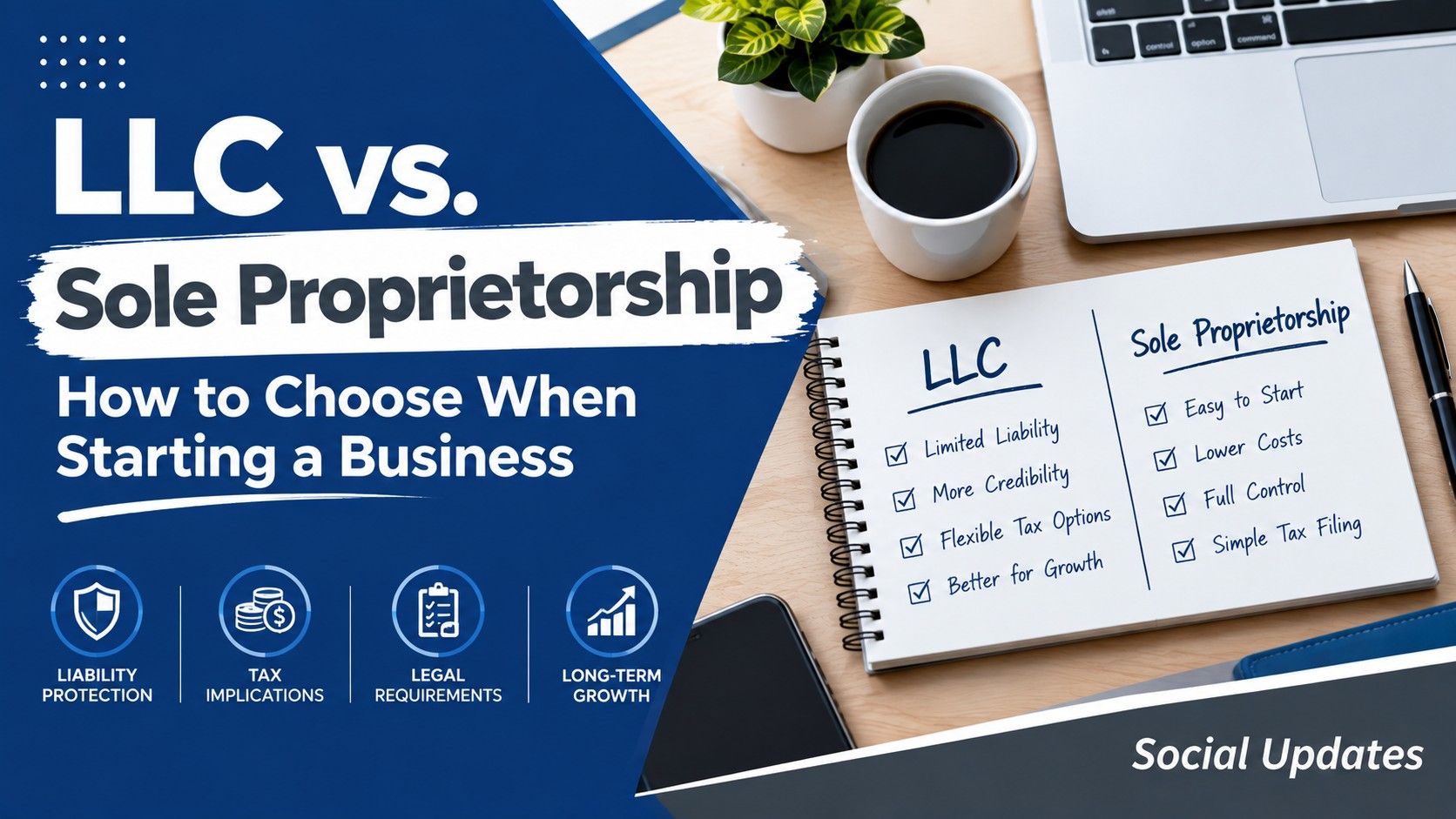
Choosing a business structure is one of the first real decisions a new business owner faces, and it’s easy to either overthink it or skip it entirely. Here’s a clear, practical breakdown of the two most common starting points: the sole proprietorship and the LLC.
The Core Difference: Liability Protection
A sole proprietorship is the default structure you operate under automatically the moment you start doing business under your own name, with no formal paperwork required. Legally, there’s no separation between you and the business; your personal assets (your car, your savings, your home) are exposed if the business is sued or can’t pay its debts.
An LLC (Limited Liability Company) creates a legal separation between you and the business. If structured and maintained properly, an LLC generally protects your personal assets from business debts and lawsuits, since the business is treated as a distinct legal entity rather than simply an extension of you personally.
This liability distinction is the single biggest factor most new business owners should weigh, and it becomes more important as your business takes on financial risk, signing contracts, hiring employees, or carrying physical liability like a storefront customers visit in person.
Cost and Paperwork Differences
Sole proprietorship: No formation paperwork or state filing fee required in most cases. You may need a local business license depending on your city or industry, but there’s no separate entity to register with your state.
LLC: Requires filing formation paperwork with your state and paying a filing fee. This Varies significantly by state, commonly ranging from roughly $50 to a few hundred dollars. Many states also charge an annual or biennial renewal fee to keep the LLC in good standing.
The LLC requires more upfront effort and ongoing cost, but that cost buys the liability protection a sole proprietorship doesn’t offer.
You May Also Like: How to Negotiate Your Salary When You Get a Job Offer
How Taxes Work for Each
Sole proprietorship: Business income passes directly through to your personal tax return. You report profit or loss on a Schedule C form, and the income is subject to self-employment tax in addition to regular income tax.
LLC: By default, the IRS taxes a single-member LLC exactly the same way as a sole proprietorship. Profits pass through to your personal return. The key difference is that an LLC also has the option to elect S-corporation tax treatment once the business is profitable enough. This can reduce self-employment tax liability in some cases by allowing you to pay yourself partly through a salary and partly through distributions.
Neither structure inherently pays less tax by default; the LLC simply opens additional tax election options that a sole proprietorship doesn’t have.
When a Sole Proprietorship Makes Sense
- You’re testing a business idea before committing significant time or money
- Your work carries genuinely low liability risk, freelance writing or consulting with minimal physical or financial exposure, for example
- You want to start immediately without upfront paperwork or fees
- You’re operating on a very limited budget, and the LLC filing fee is a real barrier right now
When an LLC Makes More Sense
- Your business involves any meaningful liability risk, physical products, in-person services, or contracts with real financial exposure
- You’re bringing on business partners and want a clear legal structure for shared ownership
- You want to separate business and personal finances and assets clearly, both for protection and for cleaner bookkeeping
- You plan to seek business loans, since some lenders and vendors prefer working with a formal business entity
- Your business has grown past the “testing an idea” stage and represents real, ongoing income
A Practical Middle Path
Many new business owners start as sole proprietors while testing an idea, then convert to an LLC once the business generates consistent revenue or takes on real liability exposure. This isn’t the only valid approach, but it’s a common and reasonable way to avoid upfront cost and complexity before you know whether the business will actually work.
What Neither Structure Does
Neither a sole proprietorship nor a basic LLC provides tax-exempt status, automatic trademark protection for your business name, or protection from your own personal negligence or wrongdoing, an LLC protects against business debts and most lawsuits related to the business, but it doesn’t shield you if you personally commit fraud or cause direct harm through your own actions.
Frequently Asked Questions
Do I need a lawyer to form an LLC?
Not necessarily; many states allow you to file LLC formation paperwork directly, and various online services help with the process for a modest additional fee. A lawyer becomes more valuable for complex situations, such as multiple business partners or specific liability concerns unique to your industry.
Can I convert a sole proprietorship into an LLC later?
Yes, this is common and generally straightforward. You file LLC formation paperwork with your state and update your business accounts, contracts, and licenses to reflect the new entity.
Does an LLC protect me from all lawsuits?
No. An LLC generally protects your personal assets from business debts and most lawsuits related to the business, but it doesn’t protect you from liability for your own direct negligence, fraud, or wrongdoing.
Is an LLC always better than a sole proprietorship?
Not necessarily; it depends on your specific liability risk, budget, and business stage. A very low-risk, early-stage business may reasonably start as a sole proprietorship before converting to an LLC once real liability or revenue justifies the added cost.
You May Also Like: How to Meal Prep for a Week Without Getting Bored
Note: This article is for general informational purposes and isn’t a substitute for professional legal or tax advice specific to your situation.


Contributer