

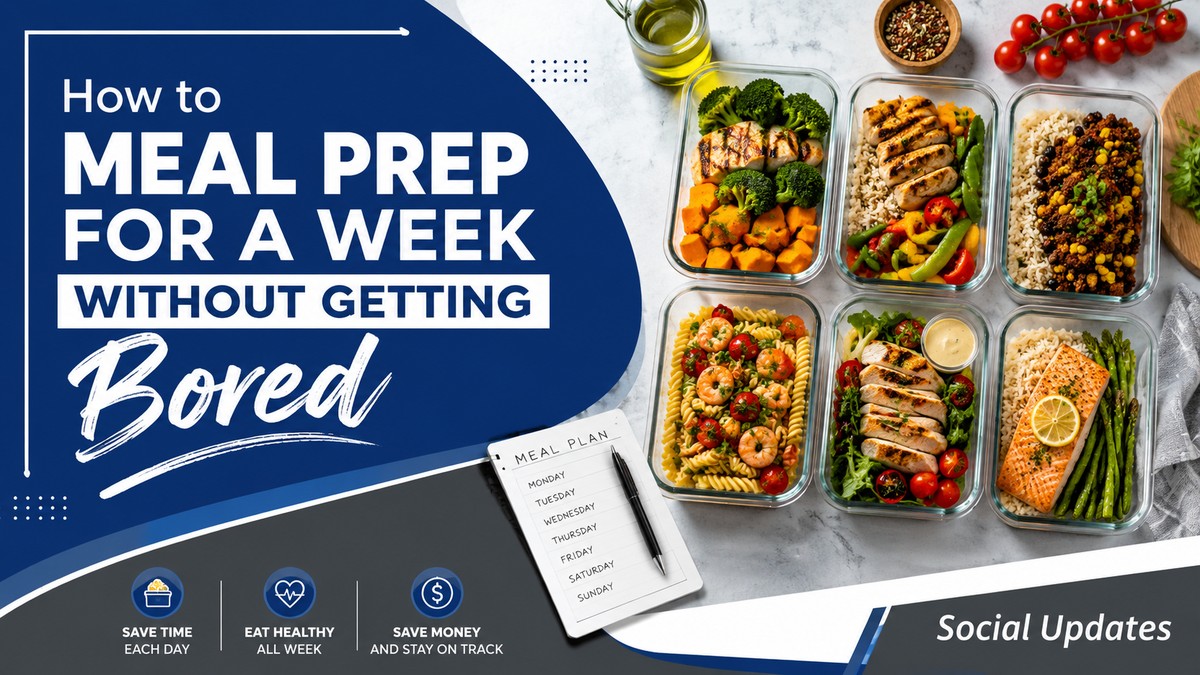
Most people who quit meal prepping don’t quit because it’s too much work; they quit. After all, eating the same chicken-rice-broccoli container five days in a row is genuinely miserable by Wednesday. The solution isn’t to abandon meal prep; it’s to prep smarter, with built-in variety, instead of committing to five identical meals.
Here’s how to do that without spending significantly more time than traditional single-meal prepping.
The Core Shift: Prep Components, Not Complete Meals
Instead of assembling five identical containers, prep separate components a protein, a starch, a vegetable, and a sauce and combine them differently throughout the week. This is the single biggest change that eliminates boredom, because the same base ingredients can become several distinct-feeling meals depending on how they’re combined and seasoned.
Example: Prep grilled chicken, rice, roasted vegetables, and two sauces (spicy peanut and garlic-herb). Monday, it’s a peanut-sauce bowl. Wednesday, the same chicken and rice become part of a wrap with the garlic-herb sauce: same base prep, genuinely different meals.
Step 1: Prep 2-3 Proteins, Not Just One
Cooking two or three different proteins in one prep session say, chicken thighs and a batch of seasoned ground turkey takes only marginally more time than cooking one, but it doubles or triples your meal variety for the week. Rotate between them rather than eating the same protein five days straight.
Step 2: Make 2 Sauces or Seasoning Blends
A sauce or seasoning blend is the fastest way to make identical base ingredients taste like different meals. A simple lemon-garlic dressing and a spicy chili-lime sauce, made in five minutes each, can transform the same batch of chicken and rice into two distinctly different-feeling dinners.
Step 3: Vary the Format, Not Just the Flavor
The same ingredients feel different depending on how they’re served:
- Bowl format: protein, starch, and vegetable served together with a sauce
- Wrap or taco format: the same ingredients rolled into a tortilla
- Salad format: the same protein and vegetables over greens instead of rice
- Soup format: shredded protein and vegetables added to a broth base
Rotating format alone without changing a single ingredient meaningfully reduces the sense of eating “the same thing” all week.
Step 4: Prep Vegetables Separately From the Rest
Vegetables lose texture fastest when pre-mixed into a full dish and reheated repeatedly. Keeping them in a separate container and adding them fresh (or with a quick reheat) at the point of eating preserves texture and makes the meal feel less like reheated leftovers.
Step 5: Batch-Cook a Flexible Starch
Instead of committing to rice for the whole week, batch-cook a starch that works in multiple formats rice works in bowls, wraps, and soups, while a batch of roasted potatoes works in bowls, hash formats, and alongside eggs for breakfast. This flexibility means you’re not locked into one specific dish shape for every meal.
Step 6: Add One “Wildcard” Meal
Reserve one meal in the week for something entirely outside your prepped components: takeout, a quick from-scratch dish, or leftovers from a different source. This breaks the monotony psychologically, even though it’s a small logistical exception, and it makes the four or five prepped meals feel less like an obligation.
You May Also Like: Signs of Burnout vs. Normal Tiredness — How to Tell the Difference
A Sample Weekly Prep Session
Prep once (60-75 minutes):
- 2 proteins: grilled chicken thighs, seasoned ground turkey
- 1 flexible starch: a large batch of rice
- 2 roasted vegetables: broccoli and bell peppers
- 2 sauces: garlic-herb yogurt sauce, spicy peanut sauce
Meals across the week:
- Chicken + rice + broccoli + garlic-herb sauce (bowl)
- Ground turkey + peppers wrapped in a tortilla with peanut sauce
- Chicken over greens with peppers and garlic-herb sauce (salad)
- Ground turkey + rice + broccoli, peanut sauce (bowl, different protein)
- Wildcard meal: anything outside the prep
Five meals, two proteins, one starch, two vegetables, and two sauces genuinely varied without needing five separate recipes.
Storage Tips to Keep Prepped Food Appealing
- Store sauces separately and add them just before eating, so components don’t get soggy sitting in the fridge for days.
- Use glass containers when possible; reheating in glass tends to preserve texture better than plastic, and food often looks (and therefore feels) more appetizing in clear containers than opaque ones.
- Don’t prep more than 4-5 days at once. Most cooked proteins and vegetables start declining in quality and food safety beyond that window; freeze extra portions instead of pushing them further into the week.
Common Meal Prep Mistakes That Lead to Burnout
Even with a good system, a few habits quietly kill people’s meal prep routines:
Overcomplicating the first attempt. Trying to prep five completely different recipes in one session is exhausting and unsustainable. The component method works precisely because it’s a small number of base ingredients recombined, not five separate dishes cooked from scratch.
Skipping the sauce step. Sauces are the lowest-effort, highest-impact part of this system. Skipping them to save five minutes is the single most common reason prepped meals start tasting repetitive by midweek.
Prepping food you don’t actually like reheated. Some foods (crispy items, delicate fish, anything meant to be eaten immediately) don’t hold up well to reheating. Building a weekly rotation around foods that genuinely taste good a few days later avoids the disappointment that makes people abandon prepping altogether.
Not accounting for a busy or unpredictable week. If your schedule varies significantly day to day, prep in smaller batches (2-3 days) more frequently rather than committing to a full week that might not match your actual eating patterns.
Frequently Asked Questions
How long does prepped food actually stay good in the fridge?
Most cooked proteins, grains, and vegetables are safely good for 3-5 days when stored properly in airtight containers. Beyond that, freezing individual portions is safer and preserves quality better than pushing prepped food into a sixth or seventh day.
Is component-based meal prep more time-consuming than prepping full meals?
Not significantly; cooking two proteins or two sauces instead of one adds only a modest amount of time in a single session, while producing more variety meaningfully across the week compared to five identical meals.
What’s the easiest way to start if I’ve never meal prepped before?
Start with just one protein and one sauce, prepped alongside a flexible starch and a vegetable, and rotate the format (bowl one day, wrap the next) before adding a second protein or sauce once the basic routine feels manageable.
Can this method work for vegetarian or vegan meal prep?
Yes, swap proteins for options like roasted chickpeas, marinated tofu, or a lentil mixture, and the same component-based, sauce-rotation approach applies just as well.
You May Also Like: What is a Puppuccino? The Complete Guide to Starbucks’ Secret Dog Treat


Contributer