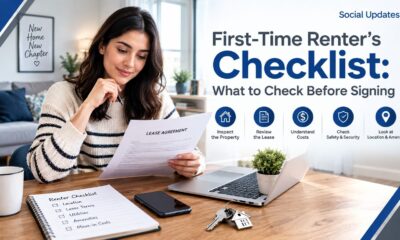

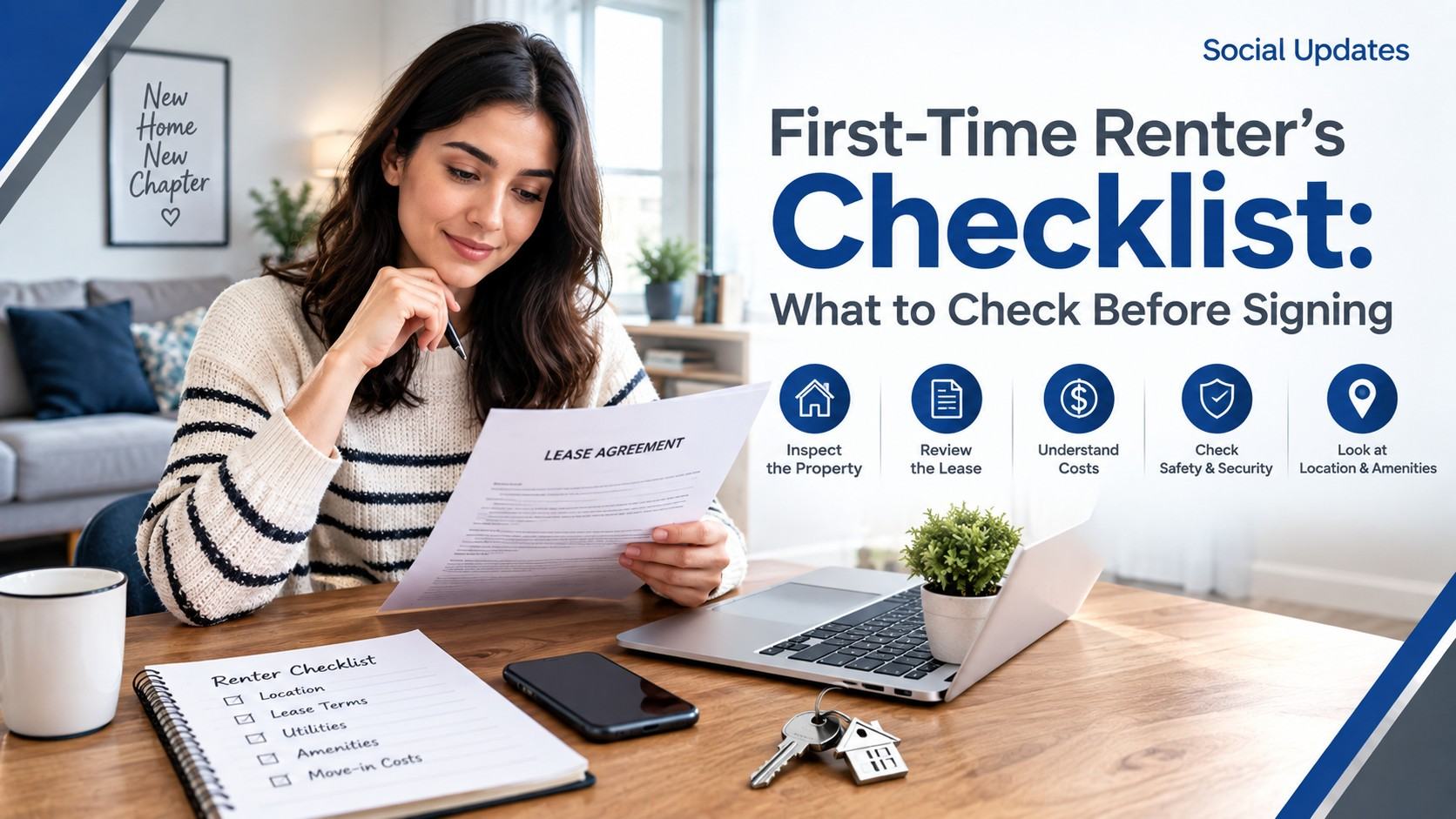
Signing your first lease commits you to a year of payments and a legal agreement most people skim rather than read. The problems that surface later a deposit you don’t get back, a repair nobody will make, a fee you didn’t know existed almost always trace back to something skipped during the viewing or buried in the lease. This checklist covers what to actually check.
Before You Even Tour: Calculate What You Can Afford
A common guideline suggests keeping rent at or below roughly 30% of your gross monthly income. Treat that as a starting reference rather than a rule, and calculate your real total housing cost, which includes:
- Monthly rent
- Utilities not included in rent (electricity, gas, water, internet)
- Renter’s insurance (typically modest, often $10-25 monthly)
- Parking fees, if separate
- Pet rent or pet fees, if applicable
Also budget the upfront cash you’ll need: first month’s rent, a security deposit (commonly equal to one month’s rent), and sometimes last month’s rent as well. That total often surprises first-time renters.
During the Tour: What to Physically Check
Water pressure and hot water. Turn on faucets and the shower. Let the hot water run for a minute to confirm it actually heats up and stays hot.
All outlets and light switches. Bring a phone charger and test outlets in each room. Non-functioning outlets are common and easy to miss.
Windows and doors. Open and close every window. Check that they lock. Confirm the entry door locks securely and that the deadbolt works.
Signs of water damage. Look at ceilings, under sinks, and around windows for staining, warping, or a musty smell all indicators of past or ongoing leaks.
Signs of pests. Check cabinet corners, under sinks, and along baseboards for droppings or traps already in place.
Heating and air conditioning. Turn them on, even out of season. Confirm both work before you sign, not after you move in.
Cell service. Check your phone’s signal in multiple rooms. Poor reception is a daily annoyance that’s difficult to fix later.
Noise. Visit at a different time of day if possible, particularly evenings, to hear what the building actually sounds like when occupied.
You May Also Like: Renting vs. Buying: How to Actually Decide
Questions to Ask the Landlord
- What’s included in rent, and what do I pay separately?
- How do I submit a maintenance request, and what’s the typical response time?
- Is there a penalty for breaking the lease early, and how much?
- Can I sublet if my situation changes?
- What’s the policy on guests staying long-term?
- When and how do you return security deposits?
- Has the unit had any recent pest or water issues?
- Is renter’s insurance required?
Ask these before signing, and get significant answers in writing rather than relying on a verbal assurance during a tour.
Lease Clauses That Deserve Careful Reading
Security deposit terms. Understand exactly what can be deducted and the timeline for return after move-out. Many jurisdictions require landlords to return deposits within a set number of days with an itemized statement of deductions.
Maintenance responsibilities. Clarify what the landlord fixes versus what you’re responsible for. Some leases assign surprising items, appliance repairs, pest control, minor plumbing to the tenant.
Early termination clause. Know the cost and notice period required to break the lease. This matters more than people expect, since jobs and life circumstances change.
Renewal and rent increase terms. Check whether the lease renews automatically and whether there are limits on how much rent can increase at renewal.
Entry notice requirements. Most jurisdictions require landlords to give advance notice before entering. Confirm the lease reflects the legal requirement in your area.
Guest and occupancy limits. Some leases restrict how long guests can stay, which matters if you expect visitors or a partner spending significant time there.
Document the Unit’s Condition Before You Move In
This is the single most effective step for protecting your security deposit. Before moving anything in, photograph and video every room, including existing damage, scuffed floors, wall marks, stained carpet, and appliance dents. Timestamp the files and email them to yourself for a dated record.
Many landlords provide a move-in condition checklist. Complete it thoroughly, note every existing issue, and keep a signed copy.
Without this documentation, distinguishing pre-existing damage from damage you caused becomes nearly impossible at move-out.
Know Your Basic Tenant Rights
Tenant protections vary significantly by state, city, and country, but most jurisdictions guarantee some baseline rights: a habitable living space, advance notice before landlord entry, protection against retaliatory eviction, and defined procedures for deposit returns. Look up the specific tenant rights in your area before signing, since local rules often provide stronger protections than a lease suggests.
Red Flags Worth Walking Away From
- A landlord who pressures you to sign immediately without time to read the lease
- Requests for cash payment or wire transfers with no receipt or paper trail
- Refusal to provide a written lease
- Unwillingness to let you view the actual unit you’d be renting
- A listing that seems dramatically underpriced for the area, which frequently signals a rental scam
Frequently Asked Questions
How much should I budget for upfront rental costs?
Plan for first month’s rent plus a security deposit (commonly one month’s rent), and in some cases last month’s rent as well, often totaling two to three times your monthly rent before you move in.
Can a landlord keep my entire security deposit?
Only for legitimate, documented reasons like unpaid rent or damage beyond normal wear and tear. Most jurisdictions require an itemized statement of deductions within a set timeframe, which is why move-in documentation matters so much.
What’s the difference between normal wear and tear and damage?
Normal wear and tear covers deterioration from ordinary use: faded paint, minor carpet wear, small nail holes. Damage means something broken, stained, or altered beyond ordinary use, and landlords can typically deduct for that.
Do I really need renter’s insurance?
Many leases now require it, and even when optional, it’s typically inexpensive and covers your personal belongings plus liability. Your landlord’s insurance covers the building, not your possessions.
You May Also Like: How to Find Cheap Flights: A Realistic Guide


Contributer


Entertainment
Kim Kardashian’s Husbands, Kids & Lewis Hamilton Romance