

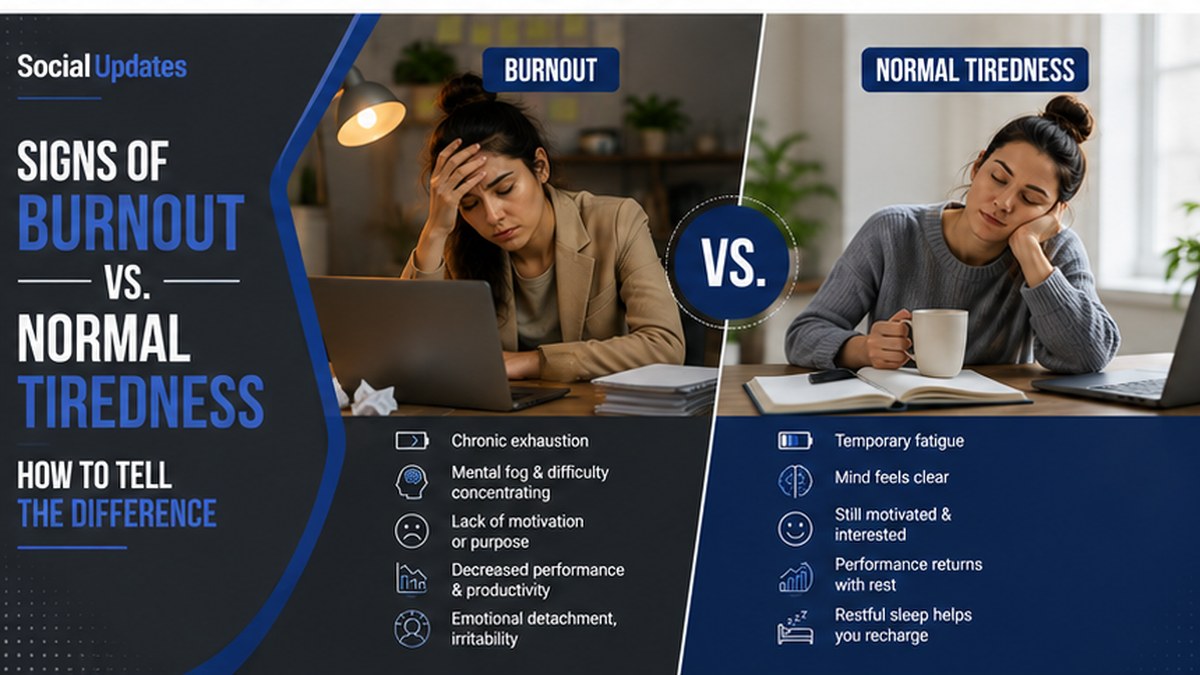
“I’m just tired” is often the first thing people say when they’re actually experiencing burnout. The two can feel similar on the surface: low energy, wanting to sleep more, less motivation, but they have different causes, and more importantly, different fixes. Treating burnout like ordinary tiredness (more sleep, a weekend off) often doesn’t work, because the underlying problem isn’t rest deprivation alone.
Here’s how to tell which one you’re actually dealing with, and what to do about it.
The Core Difference: Burnout vs. Normal Tiredness
Ordinary tiredness is physical and situational; it responds to rest. A few good nights of sleep, a lighter week, or a relaxing weekend genuinely restores your energy, because the cause is straightforward: your body needs recovery.
Burnout is a state of chronic emotional, mental, and physical exhaustion caused by prolonged stress, usually from work, but sometimes caregiving, school, or other sustained pressure. Critically, burnout does not resolve with rest alone. You can sleep nine hours, take a weekend off, and still feel just as depleted, because the underlying stressor hasn’t actually changed.
Signs That Point to Ordinary Tiredness
- Sleep and rest measurably improve how you feel within a day or two
- Your motivation for things you enjoy remains completely intact. You feel tired, but you still maintain a genuine interest in your hobbies, friends, and plans. Furthermore, an identifiable, temporary cause explains your tiredness. This exhaustion stems directly from a hard week, poor sleep, or a minor cold.
- You still feel a sense of accomplishment or satisfaction from your work or responsibilities
Signs That Point to Burnout
- Exhaustion persists even after rest, vacation, or a lighter schedule
- A growing sense of cynicism or detachment about work specifically, or life more broadly
- Reduced sense of accomplishment, even when you’re objectively getting things done
- Difficulty concentrating that doesn’t improve with sleep
- Physical symptoms with no clear medical cause: headaches, stomach issues, frequent minor illnesses
- Emotional numbness or irritability that feels disproportionate to daily triggers
- A creeping sense that nothing you do actually makes a difference
If several of these have been present for weeks or months, not just a bad few days, burnout, not simple tiredness, is the more likely explanation.
Why This Distinction Actually Matters?
If it’s ordinary tiredness, rest fixes it. If it’s burnout, rest alone often doesn’t, and treating burnout like a rest-deficiency problem can leave people cycling through vacations and weekends that provide only temporary relief before the exhaustion returns, because the root cause (an unsustainable workload, lack of control, misaligned values, or unresolved chronic stress) is still there.
Recognizing burnout for what it is shifts the question from “how do I rest more” to “what actually needs to change.”
You May Also Like: Renting vs. Buying: How to Actually Decide
What Actually Helps With Burnout?
Identify the specific source, not just the symptom. Burnout researchers commonly point to a mismatch between a person and their environment: too much workload, too little control, insufficient reward, breakdown of community, absence of fairness, or a conflict between personal values and job demands. Pinpointing which of these applies to your situation makes the problem far more solvable than “I’m just burned out.”
Address what’s within your control first. This might mean renegotiating workload with a manager, setting firmer boundaries around after-hours availability, delegating tasks, or having a direct conversation about unclear expectations. Small, concrete changes to the actual source of strain tend to help more than general self-care.
Rebuild recovery time, not just rest time. Recovery is different from simply not working; it means genuinely disengaging (not checking email “just for a minute”), and doing something that restores rather than just fills time. For many people, this looks less like a passive weekend and more like an activity that provides a sense of accomplishment or connection outside of work.
Get support rather than trying to push through alone. Burnout is a known occupational phenomenon, and talking to a therapist, doctor, or even a trusted colleague or manager about what’s happening can open options: schedule changes, workload adjustments, or treatment for related symptoms like anxiety or depression that aren’t visible when you’re inside the situation.
When to Seek Professional Support
If exhaustion, detachment, or reduced functioning has lasted more than a few weeks, is affecting your relationships or ability to work, or comes with symptoms of depression or anxiety, it’s worth talking to a doctor or mental health professional. Burnout and clinical depression can overlap and are sometimes hard to distinguish without professional input, and both deserve real support rather than being pushed through alone.
A Quick Self-Check
Ask yourself these three questions:
If I took a full week off with no obligations, do I expect to feel meaningfully better, or largely the same? Ordinary tiredness usually says “better.” Burnout often says “the same, or only briefly better.”
Do I still feel a sense of purpose or accomplishment in the things I’m doing, even if I’m tired doing them? Losing that sense, rather than just feeling physically drained, is a stronger burnout signal than exhaustion alone.
Has this been building for weeks or months, or is it tied to a specific recent event? A short-term, identifiable cause points toward tiredness; a slow, creeping decline without a clear trigger points toward burnout.
None of these questions replace a conversation with a doctor or therapist, but they’re a useful starting point for figuring out which direction to look.
Frequently Asked Questions
Can burnout happen outside of work?
Yes. While the term originated in occupational contexts, the same pattern of chronic stress without adequate recovery can occur with caregiving, intensive parenting, prolonged academic pressure, or any sustained demand without sufficient support or control.
How long does it take to recover from burnout?
Recovery timelines vary widely depending on how severely the condition impacts you and whether you address the underlying cause. Milder cases can resolve in just a few weeks if you make quick lifestyle changes. In contrast, severe or prolonged burnout requires several months of recovery. This recovery takes much longer if you leave the source of your strain unresolved.
Is burnout the same as depression?
Both conditions share overlapping symptoms: low energy, reduced motivation, and difficulty concentrating. However, a specific chronic stressor typically triggers burnout. In contrast, depression can occur without any identifiable external cause. Furthermore, depression often includes a persistent low mood that extends far beyond simple exhaustion. A professional can help distinguish between the two.
Will a vacation fix burnout?
A vacation can provide temporary relief, but if the underlying source of chronic stress hasn’t changed, symptoms typically return once the person is back in the same environment. Lasting recovery usually requires addressing the actual cause, not just taking a break from it.
You May Also Like: How to Pack a Carry-On for a Week-Long Trip


Contributer