
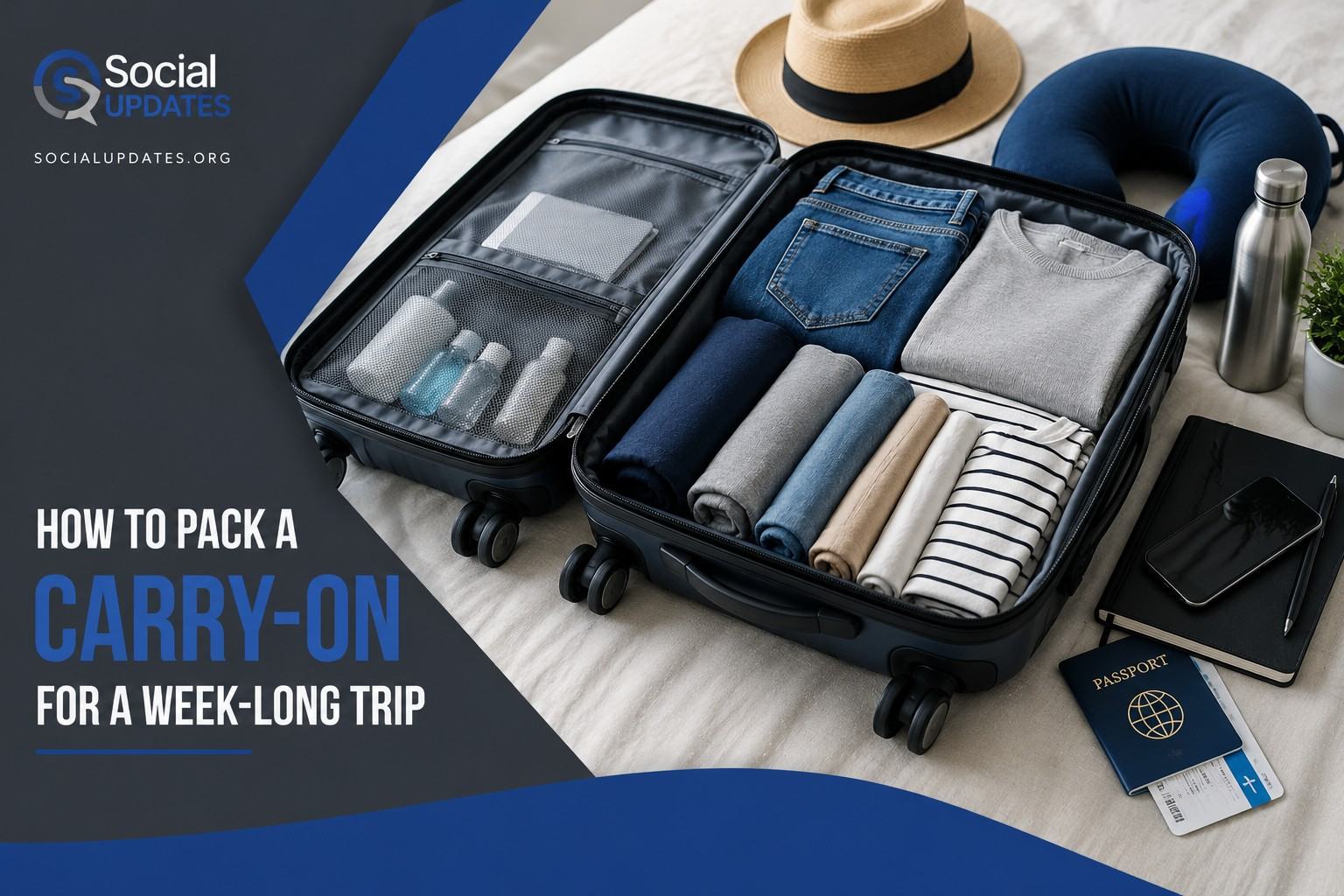
Packing a full week’s worth of clothes into a single carry-on sounds impossible until you actually try a system instead of just “packing.” Most overpacking isn’t due to needing too many things; it’s due to not having a plan before you start throwing items into a suitcase.
Here’s a method that consistently works for a 7-day trip, in any climate, without checking a bag.
The Core Rule: Plan Outfits, Not Items
The biggest mistake people make is packing individual items (“3 shirts, 2 pants, a jacket…”) instead of planning complete outfits that share pieces. A capsule approach where every top works with every bottom means 5-6 pieces of clothing can realistically produce 10+ outfit combinations.
Quick formula for 7 days: 3 bottoms, 5 tops, 1 layering piece, 1 pair of shoes beyond what you’re wearing. That’s 10 items covering a full week, because you’re repeating and remixing rather than packing a fresh outfit for every single day.
Step 1: Choose a Base Color Palette
Pick two neutral colors (black, navy, olive, tan) as your base, plus one or two accent colors. Every item you pack should be able to pair with at least two other items. This single decision does more to shrink your suitcase than any packing technique.
Step 2: Roll, Don’t Fold
Rolling clothes rather than folding them flat saves valuable space and reduces wrinkles, since rolled fabric doesn’t develop the same sharp creases as folded stacks. Pack rolled items tightly together like puzzle pieces rather than loosely stacked.
For structured items like blazers or dress shirts, a light fold is still better than rolling; reserve rolling for casual clothes, activewear, and underlayers.
Step 3: Use the “Wear the Bulkiest Items” Trick
Wear your heaviest shoes, jacket, and bulkiest layer on the plane instead of packing them. This alone can free up 30-40% more suitcase space, since bulky items are the worst space-to-weight ratio you can pack.
Step 4: Pack by Category, Not by Outfit
Group similar items together: all tops in one section, all bottoms in another rather than packing full outfits as units. This makes it far easier to see what you actually have at a glance and mix pieces once you’re at your destination, instead of being locked into pre-planned combinations.
Step 5: Limit Toiletries to Travel Sizes and Skip Duplicates
Most hotels stock basic toiletries. Skip full-size bottles entirely where possible and use refillable travel containers (3.4 oz / 100 ml or under for carry-on compliance) only for products you genuinely can’t substitute at your destination.
A workable toiletry kit for a week: travel-size shampoo/conditioner combo, a small toothpaste, a multi-use bar soap, and any prescription or specialty items you can’t easily buy elsewhere.
Step 6: Use Packing Cubes
Packing cubes aren’t just for organization; they compress clothing and make it possible to fit noticeably more into the same bag by eliminating wasted air space between loosely packed items. Separate cubes by category (tops, bottoms, underlayers) so you’re not unpacking the whole bag to find one shirt.
Step 7: Do a “Remove One Thing” Pass Before You Zip It
Once your bag is packed, go through it once more and remove one item you’re on the fence about. Most people pack for a hypothetical version of the trip rather than the actual one, and this single pass catches the “just in case” items that rarely get worn.
You May Also Like: Renting vs. Buying: How to Actually Decide
A Sample 7-Day Carry-On Packing List
- 3 bottoms (2 pants/shorts, 1 versatile skirt or joggers)
- 5 tops (mix of short and long sleeve, all color-coordinated)
- 1 layering piece (light jacket or cardigan)
- 1 pair of shoes beyond what you’re wearing
- 7 pairs of underwear, 3-4 pairs of socks (hand-wash extras if needed)
- 1 sleepwear set
- Travel-size toiletry kit
- Chargers, adapter, and a portable battery pack
- 1 versatile “dress up” option if the trip calls for it
This list is easy to adapt: swap in swimwear for a beach trip, or an extra layer for a colder climate, while keeping the same core structure.
Adjusting the System for Different Climates
The core method stays the same regardless of destination: plan outfits, not items, and pick a shared color palette, but a few adjustments make it work anywhere:
Cold climates: Layering matters more than item count. Two thin layers (a base layer plus a mid-layer) pack smaller and insulate better than one thick sweater, and they let you adjust throughout the day rather than being stuck in one heavy piece.
Hot or humid climates: Prioritize quick-dry, breathable fabrics over cotton, which stays damp longer and takes up more relative space once even slightly worn. Pack one extra top per three days if you expect to sweat through clothing and won’t have laundry access.
Mixed climates (city trip with a day trip to the mountains, for example): Build your palette around the milder climate and add just one or two specific pieces: a packable rain shell, a warm hat for the outlier day, rather than packing a second wardrobe.
Common Packing Mistakes That Blow the Whole System
Even with a good plan, a few habits tend to sabotage a carry-on-only trip:
Packing “just in case” outfits for hypothetical scenarios that rarely happen a fancy dinner that doesn’t materialize, a hike that gets rained out. If it’s not already on your itinerary, leave it home.
Ignoring shoe weight. Shoes are usually the single heaviest, bulkiest item in any bag. Two pairs (one worn, one packed) is realistic for most week-long trips; three is rarely necessary.
Forgetting the return trip. Leave a small amount of space or a foldable tote for souvenirs or laundry you’ll be bringing home a bag packed to its absolute limit on the way out has nowhere to go on the way back.
Not checking the airline’s specific carry-on dimensions. Carry-on size limits vary by airline, and budget carriers in particular often enforce stricter limits than you’d expect. Confirm your bag fits before you’re at the gate.
Frequently Asked Questions
Can I really fit a week of clothes in a carry-on?
Yes, with a capsule wardrobe approach, a shared color palette and mix-and-match pieces let 8-10 items produce a full week of distinct outfits, rather than packing a new outfit for every day.
What’s the biggest space-waster people pack unnecessarily?
Bulky shoes and jackets. Wearing your heaviest items on the plane instead of packing them typically frees up more space than any folding or rolling technique.
Should I do laundry mid-trip instead of packing more?
For trips longer than a week, planning one laundry day (even just hand-washing a few items in a hotel sink) is often lighter and easier than packing double the clothing.
Do packing cubes actually make a difference?
Yes, beyond organization, they compress clothing and remove wasted air space, which measurably increases how much fits in the same size bag compared to loose packing.\
You May Also Like: What is a Puppuccino? The Complete Guide to Starbucks’ Secret Dog Treat


Contributer