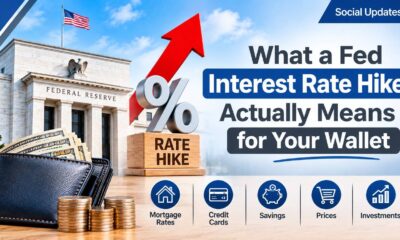

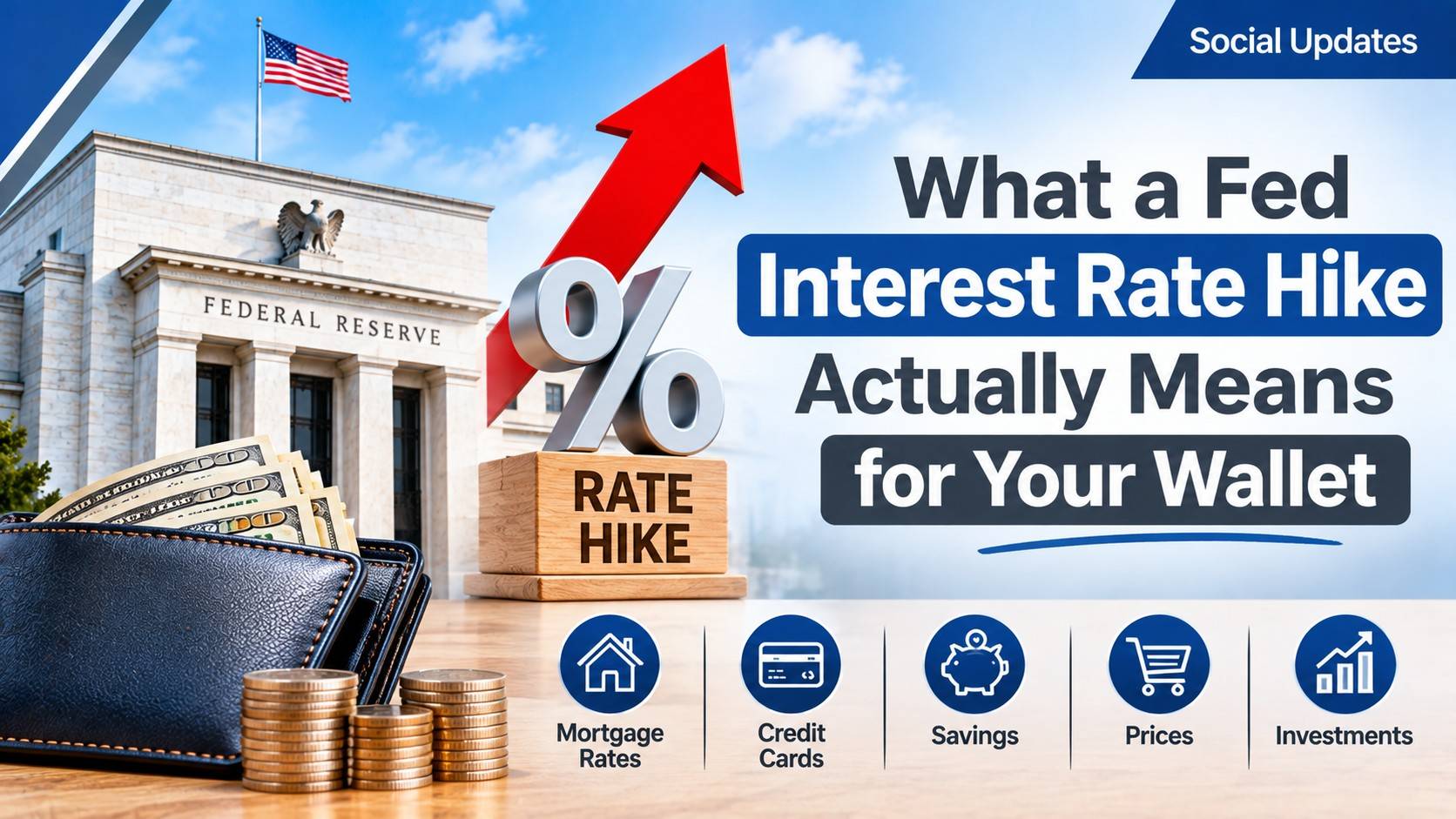
Federal Reserve meetings generate a lot of headlines, but the practical translation- what actually changes for a regular household- often gets buried under market jargon. Here’s a plain breakdown of what a rate decision means and where you’ll actually feel it.
What the Fed Actually Controls?
The Federal Reserve sets the federal funds rate, the interest rate banks charge each other for short-term overnight loans. The Fed doesn’t directly set your mortgage rate, credit card APR, or savings account yield, but those all move in response to the federal funds rate, because it influences the broader cost of borrowing throughout the economy.
The Federal Open Market Committee (FOMC), the Fed’s policy-setting group, meets roughly eight times a year to review economic data and decide whether to raise, lower, or hold the rate steady. A 0.25 percentage point move is the most common increment.
Why the Fed Raises Rates
The Fed generally raises rates to slow inflation. Higher borrowing costs discourage spending and borrowing across the economy, which, in theory, cools demand and eases upward pressure on prices. This is a blunt tool: raising rates doesn’t target grocery prices or housing costs specifically, but slows the broader flow of money through the economy.
The trade-off is real: higher rates also increase the cost of borrowing for everyone, including people who aren’t driving inflation. This is why rate decisions are closely watched and often debated among economists.
Where You’ll Actually Feel a Rate Hike
Mortgages. Rate hikes push mortgage rates higher, though not always immediately or by the same amount, since mortgage rates track longer-term bond yields rather than the federal funds rate directly. If you have an adjustable-rate mortgage, your payment can rise at your next adjustment period. Fixed-rate mortgage holders aren’t affected on existing loans, but new mortgages or refinances become more expensive.
Credit cards. Most credit cards carry variable interest rates tied closely to the federal funds rate, so a Fed hike typically raises your card’s APR within one to two billing cycles. This is one of the most immediate and direct ways households feel a rate change.
Savings accounts and CDs. This is the upside. Banks typically raise the interest they pay on savings accounts and certificates of deposit when the Fed raises rates, though often more slowly than they raise borrowing costs. High-yield savings accounts tend to respond fastest.
Auto loans. New auto loan rates rise, making financing a new vehicle more expensive, though existing fixed-rate auto loans aren’t affected.
Business and small business loans. Variable-rate business loans and lines of credit become more expensive. This can affect hiring and expansion decisions for small businesses that rely on financing.
You May Also Like: LLC vs. Sole Proprietorship: How to Choose When Starting a Business
What Doesn’t Change Immediately
Fixed-rate debt you already hold doesn’t change when the Fed moves. Examples include a fixed mortgage, a fixed personal loan, or a fixed auto loan. This is a common point of confusion. A rate hike affects new borrowing and variable-rate debt. It does not affect the payment on a loan you locked in at a fixed rate previously.
How to Actually Respond to a Rate Hike
If you’re carrying variable-rate debt, particularly credit card balances, a rate hike is a good prompt to prioritize paying that down faster, since the cost of carrying it just increased.
If you’re saving, check whether your bank has actually raised your savings rate; banks don’t always pass along increases automatically or promptly, and shopping around for a higher-yield account can meaningfully increase what you earn on cash you’re holding.
If you’re planning a major purchase requiring financing, when shopping for a home or a car, understand that borrowing costs are moving in a specific direction. You should factor that into your timeline. Do this rather than being surprised by a rate quote. Higher rates can surprise you if you only remember quotes from a year or two ago.
If you run a business with variable-rate financing, this is a reasonable moment to review your debt structure and consider whether locking in a fixed rate, if available, makes sense given the current rate environment.
Frequently Asked Questions
Does a Fed rate hike raise my current fixed mortgage payment?
No. A fixed-rate mortgage payment doesn’t change when the Fed adjusts rates. Only new mortgages, refinances, or existing adjustable-rate mortgages at their reset point are affected.
How quickly do credit card rates change after a Fed decision?
Typically within one to two billing cycles, since most credit cards carry variable rates tied closely to the federal funds rate.
Is a rate hike always bad for consumers?
Not entirely; it raises borrowing costs, but it also typically increases the interest paid on savings accounts and CDs. This Benefits people holding cash rather than debt.
How often does the Fed meet to decide on rates?
The Federal Open Market Committee meets about eight times a year. However, it can also hold emergency meetings outside that schedule. This happens if economic conditions require it.
You May Also Like: Digital Detox: A Realistic Plan for People Who Can’t Quit Their Phone
This article is for general informational purposes and isn’t a substitute for personalized financial advice from a qualified advisor.

Contributer