
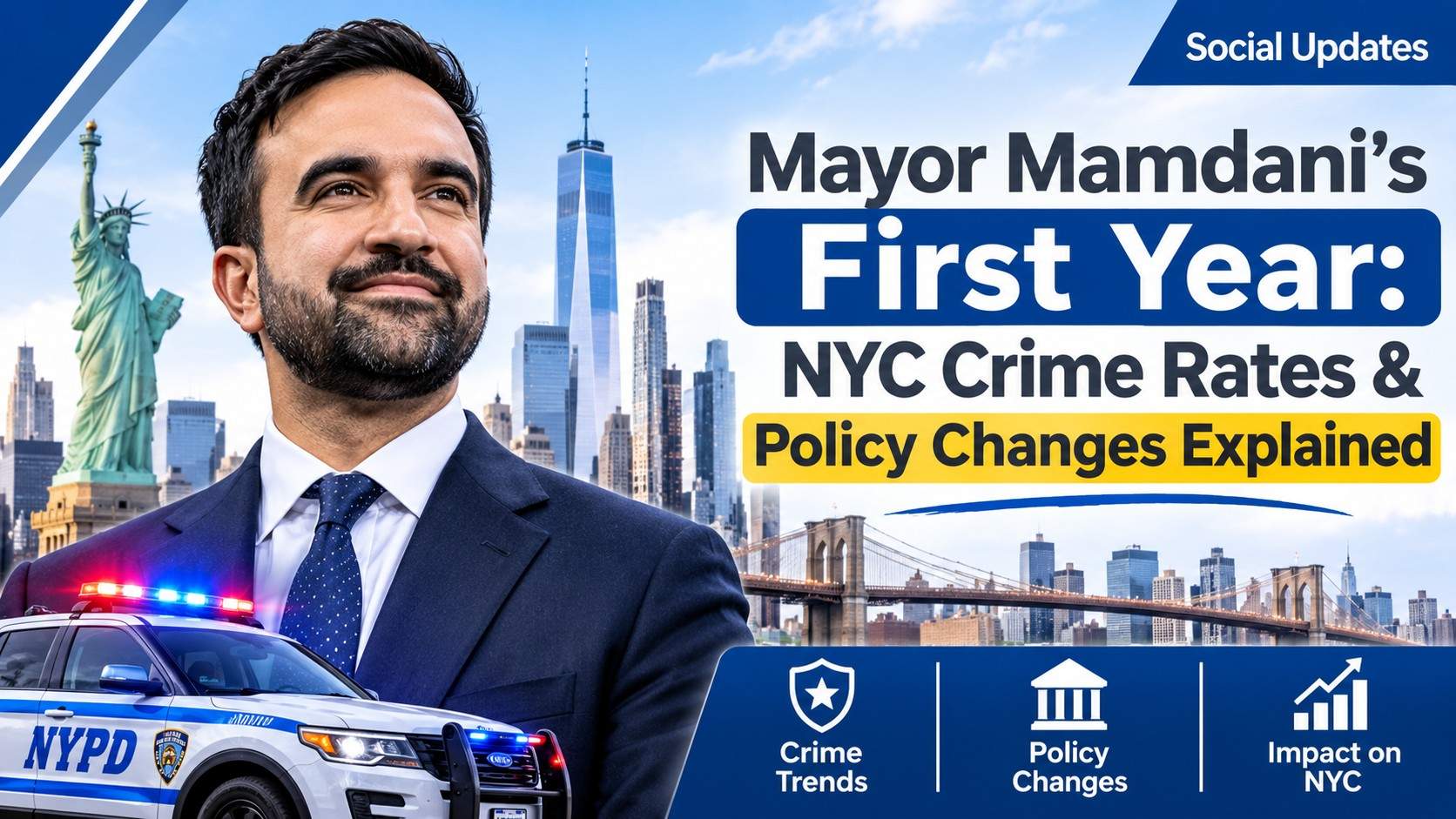
Zohran Mamdani took office as New York City’s 112th mayor on January 1, 2026, becoming the city’s first Muslim and first Asian American mayor. Nine months in, his administration has drawn national attention for historic crime statistics and real criticism over broken campaign promises.
Here’s what’s actually happened, based on official city data and reporting from across the political spectrum.
The Crime Numbers Are Real and Verified
New York City recorded its safest first half of any year on record in 2026, according to NYPD CompStat data presented jointly by Mamdani and Police Commissioner Jessica Tisch. Major crime dropped nearly 6% citywide between January and June, with the city recording the fewest murders, shooting incidents, and shooting victims in its recorded history for that period.
The first quarter alone saw 54 murders citywide, breaking the previous record low of 60 set in 2018. Murder rates fell more than 57% year-over-year in Brooklyn and over 44% in Manhattan. Staten Island went 178 days without a murder at one point in 2026, the second-longest such streak on record.
These figures come directly from NYPD data and city press briefings, not campaign material. Multiple independent outlets across the political spectrum, including some generally critical of Mamdani’s broader policy agenda, have confirmed the underlying numbers as accurate.
What’s Driving the Numbers, According to the Administration
Mamdani and Tisch have attributed the decline to what they describe as a “precision policing strategy”, targeting illegal guns, focusing on violent gang activity, and deploying officers on foot patrol in specific high-need areas and times rather than broader, less targeted approaches.
The administration also points to a “whole-of-government” strategy. It moved some functions, like homelessness outreach, away from the NYPD toward other city agencies, paired with new investment in areas like early childhood mental health.
You May Also Like: Mamdani’s Signature Policies Explained: What’s Actually Happened
Where the Administration Has Reversed Course
Despite the crime data, Mamdani’s first year hasn’t been free of controversy, including several notable reversals from campaign positions:
NYPD staffing. Mamdani campaigned on keeping police headcount flat, then reversed that position in June 2026, initially supporting Commissioner Tisch’s plan to grow the force by 580 officers, drawing sharp criticism from his own progressive base, including the New York City chapter of the Democratic Socialists of America.
In the final budget deal, that specific headcount increase was ultimately dropped, with Mamdani saying he and Tisch found other ways to meet staffing needs without the planned expansion.
Rental assistance (CityFHEPS). Budget negotiations came down to the wire over a promised expansion of the city’s rental assistance voucher program. That program had been the subject of an ongoing legal fight dating back to 2023.
The final $125.8 billion budget expanded the program by $125 million rather than the fuller expansion advocates had pushed for, drawing criticism that the administration diluted its original commitment.
Library funding. Mamdani had pledged on the campaign trail to dedicate up to 0.5% of the city’s budget to public libraries. His preliminary budget instead included a $30 million cut, later partially offset by a $2 million restoration, well short of what library system leaders say they need.
The administration has said it remains committed to the 0.5% target going forward.
Homeless encampment sweeps. Mamdani had vowed to end encampment sweeps, then resumed the practice early in his term following public backlash after the deaths of 19 people during a cold snap.
The Fiscal Backdrop
Much of the tension around these reversals traces back to a budget shortfall Mamdani inherited and has described as a serious fiscal crisis, citing a multibillion-dollar structural deficit. His administration closed a reported $5.4 billion budget gap in the city’s May 2026 budget process.
He has also pointed to what he describes as a longstanding imbalance between what New York City contributes to state revenue and what it receives back from Albany.
You May Also Like: Who is Zohran Mamdani? NYC’s Mayor, Explained
How Critics and Supporters Frame the Same Record
Supporters point to the historic crime numbers as validation of the administration’s public safety approach, alongside new investments in childcare, mental health services, and transit affordability through an expanded Fair Fares discount program.
Critics, including some police unions, opposition city council members, and commentators, argue the administration has broken specific promises to its own base on policing and rental assistance. They also note that continued declines in crime have coincided with real concerns about NYPD staffing levels and morale.
Both sets of facts are documented and not mutually exclusive. Crime statistics have genuinely reached historic lows, and the administration has genuinely reversed several specific campaign commitments under fiscal and political pressure.
Readers evaluating the first year of Mamdani’s mayoralty are encountering a real, actively debated record rather than a settled narrative in either direction.
Frequently Asked Questions
Is New York City’s crime rate actually at a historic low under Mamdani?
Yes, based on official NYPD CompStat data, the city recorded its fewest murders, shooting incidents, and shooting victims in recorded history for the first half of 2026, verified independently by multiple news outlets beyond the mayor’s own office.
Did Mamdani keep his promise to keep NYPD staffing flat?
It’s mixed. He initially reversed that promise in June 2026 to support a proposed 580-officer increase, then walked back the specific increase in the final budget deal, saying staffing needs could be met without it. That sequence drew criticism from multiple directions.
What is CityFHEPS, and why did it become a budget flashpoint?
CityFHEPS is a New York City rental assistance voucher program. A long-running legal fight over expanding it culminated in 2026 budget negotiations, where Mamdani’s administration expanded funding by $125 million, less than advocates and some council members had pushed for.
When did Mamdani become mayor, and who did he succeed?
Mamdani took office on January 1, 2026, succeeding Eric Adams, after winning the November 2025 general election with just over 50% of the vote.
You May Also Like: NYC Under Mamdani vs. Adams: What’s Actually Changed


Contributer